
If you’re wondering why is my car AC not blowing cold air, you’re not alone—it’s one of the most common vehicle problems drivers face, especially during hot weather when a properly functioning air conditioning system is essential for comfort and safety.
A vehicle’s air conditioning system does much more than keep you comfortable during warm weather. It helps improve driving conditions, reduces driver fatigue, and assists with windshield defogging during humid or rainy conditions. When your car’s AC suddenly starts blowing warm or weak air instead of cool air, it can quickly turn an enjoyable drive into an uncomfortable experience.
Many drivers assume that a malfunctioning air conditioning system simply needs more refrigerant. While low refrigerant is one of the most common causes, several other issues can prevent your AC system from producing cold air. Understanding these potential causes can help you identify problems early and avoid expensive repairs.
At AutoFix Garage, we frequently diagnose and repair vehicle air conditioning systems. In this guide, we’ll explore the most common reasons why your car AC may not be blowing cold air, warning signs to watch for, and the steps you can take to restore your vehicle’s cooling performance.
Why Your Vehicle’s Air Conditioning System Matters
According to the National Highway Traffic Safety Administration (NHTSA), proper vehicle maintenance helps improve safety and overall vehicle performance. Your car’s air conditioning system is a complex network of components working together to remove heat and humidity from the cabin.
Key AC system components include:
- Compressor
- Condenser
- Evaporator
- Refrigerant
- Expansion valve
- AC hoses and lines
- Cabin air filter
- Cooling fans
Each component plays an important role in maintaining comfortable cabin temperatures. If even one part fails, overall cooling performance can be affected.
A properly functioning AC system provides several benefits:
- Improved driving comfort
- Better visibility during humid conditions
- Reduced driver fatigue
- Enhanced passenger comfort
- Improved air quality inside the cabin
When any part of the system develops a problem, cold air output may decrease significantly.
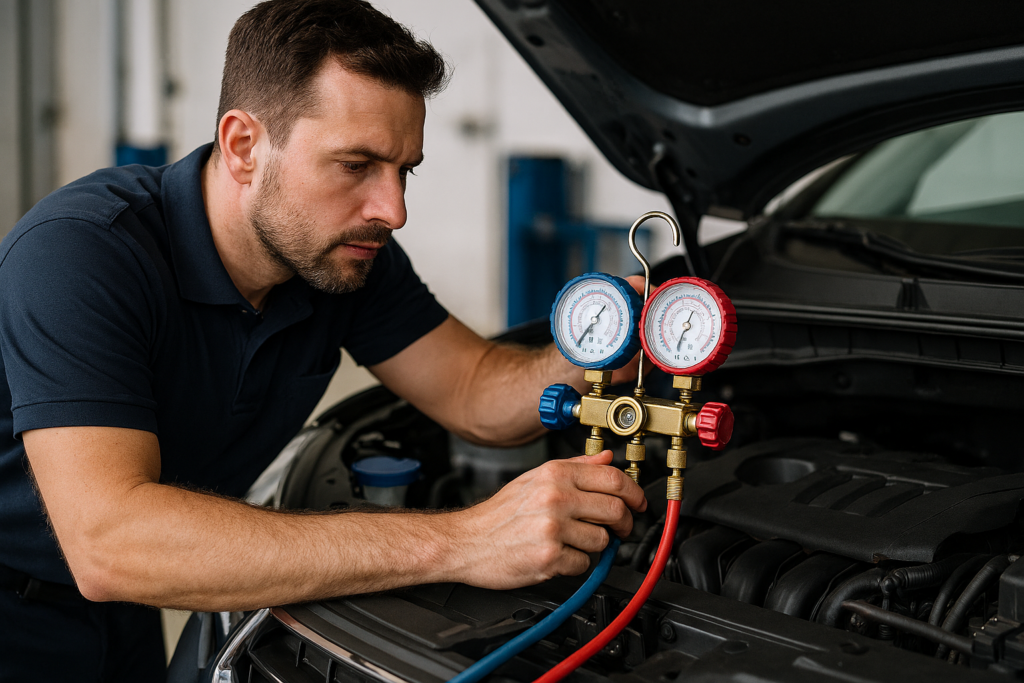
1. Low Refrigerant Levels
One of the most common answers to the question, “Why is my car AC not blowing cold air?”, is low refrigerant. Low refrigerant levels are one of the most common reasons a car AC system stops producing cold air. Refrigerant is essential for absorbing heat from the cabin and releasing it outside the vehicle. When levels drop below the recommended amount, cooling performance decreases significantly, making the cabin feel warm and uncomfortable.
Over time, refrigerant levels can decrease due to:
- Small leaks
- Damaged seals
- Worn hoses
- Loose fittings
- Component wear
Common symptoms of low refrigerant include:
- Warm air from vents
- Reduced cooling performance
- AC system cycling on and off frequently
- Hissing sounds near AC components
Because refrigerant operates within a sealed system, low levels usually indicate a leak that should be repaired before simply adding more refrigerant.
2. Refrigerant Leaks
Refrigerant leaks can gradually reduce your AC system’s ability to cool the vehicle effectively. Even a small leak can impact performance over time and place additional stress on other AC components. Identifying and repairing leaks early can help prevent costly repairs and restore proper cooling efficiency. While low refrigerant and refrigerant leaks are closely related, leaks deserve special attention because they are among the most common AC problems.
Leaks can occur in:
- AC hoses
- Compressor seals
- Condenser
- Evaporator core
- Service valves
Signs of a refrigerant leak include:
- Oily residue around AC components
- Weak airflow temperature
- Gradual loss of cooling performance
- AC compressor cycling issues
Ignoring refrigerant leaks can lead to additional damage and increased repair costs.
At AutoFix Garage, technicians use specialized leak detection equipment to identify and repair leaks before recharging the system.
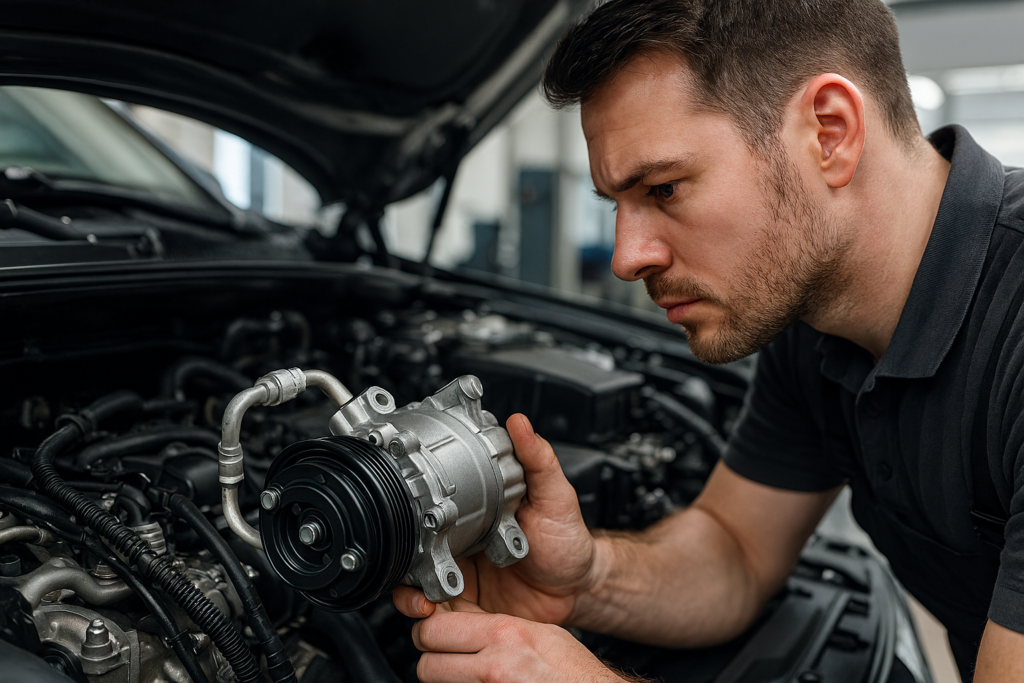
3. Faulty AC Compressor
The AC compressor is responsible for circulating refrigerant throughout the entire air conditioning system. If the compressor fails, the cooling process cannot function properly, resulting in warm air from the vents. Because it is a critical component, compressor issues should be diagnosed and repaired promptly.
Its primary role is to:
- Compress refrigerant
- Circulate refrigerant through the system
- Maintain proper cooling pressure
A failing compressor can prevent cold air production entirely.
Common compressor symptoms include:
- Warm air from vents
- Unusual noises
- Clicking sounds
- AC clutch failure
- Reduced cooling efficiency
Compressor failure can result from:
- Age and wear
- Refrigerant contamination
- Low refrigerant levels
- Electrical problems
Prompt diagnosis is important because compressor damage can affect other AC components.
4. Clogged or Dirty Condenser
The condenser plays an important role in releasing heat from the refrigerant before it re-enters the cooling cycle. Dirt, debris, and road contaminants can restrict airflow through the condenser, reducing its efficiency. Regular inspections help keep the condenser clean and operating at peak performance. The condenser releases heat absorbed from the vehicle cabin.
It is typically located near the front of the vehicle behind the grille.
Over time, the condenser can become clogged with:
- Dirt
- Leaves
- Road debris
- Insects
A blocked condenser may restrict airflow and reduce cooling performance.
Warning signs include:
- Warm air while idling
- Better cooling while driving
- Reduced overall AC efficiency
- Overheating AC components
Regular inspections help keep the condenser clean and functioning properly.
5. Faulty Cooling Fans
Cooling fans help regulate temperatures within both the engine and air conditioning system. When fans fail to operate correctly, heat can build up around the condenser, reducing the system’s ability to produce cold air. This issue is often more noticeable when driving in traffic or while idling.
When cooling fans fail, airflow across the condenser decreases, making it difficult for refrigerant to cool effectively.
Symptoms may include:
- AC works while driving but not at idle
- Rising engine temperatures
- Poor cooling performance in traffic
- Intermittent cold air
Cooling fan issues should be addressed quickly to prevent additional strain on the AC system.
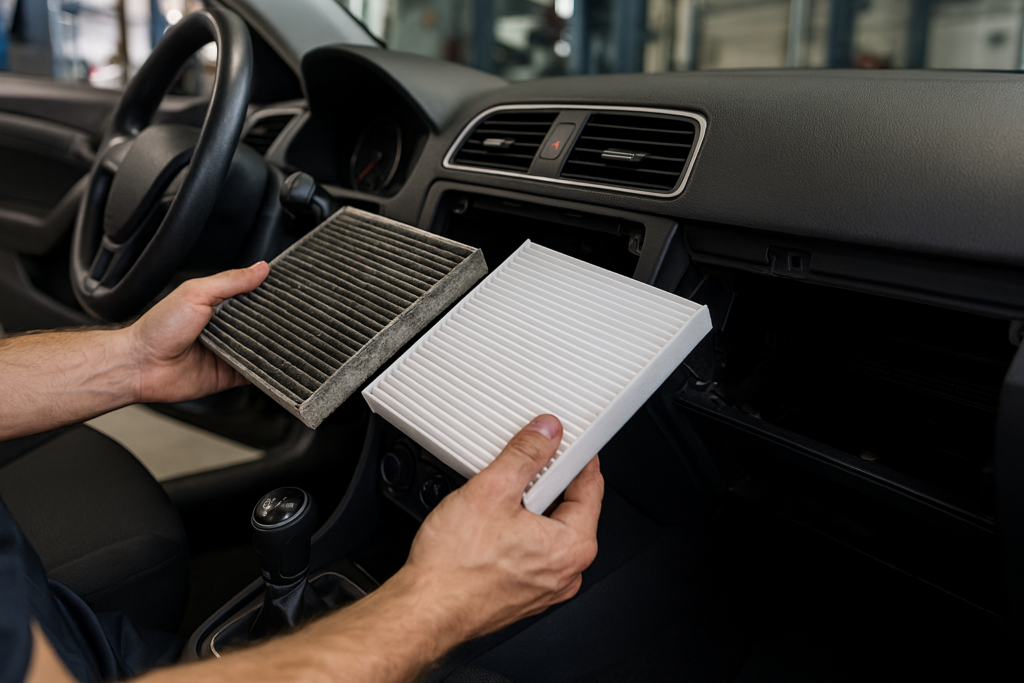
6. Dirty Cabin Air Filter
Many drivers overlook the cabin air filter when troubleshooting AC problems. A clean cabin air filter helps maintain proper airflow through your vehicle’s ventilation system. Over time, dirt, dust, and debris can clog the filter, restricting airflow and making the AC feel less effective. Replacing the cabin air filter regularly can improve both comfort and air quality.
The cabin air filter removes:
- Dust
- Pollen
- Dirt
- Airborne contaminants
A clogged filter can restrict airflow and reduce cooling effectiveness.
Common symptoms include:
- Weak airflow
- Reduced cooling performance
- Musty odors
- Increased blower motor strain
Replacing a cabin air filter is often one of the simplest and most affordable maintenance services.
7. Electrical Problems
Modern air conditioning systems rely on numerous electrical components to operate efficiently. A faulty fuse, damaged wiring, or malfunctioning sensor can disrupt communication between system components and prevent proper cooling. Electrical issues often require professional diagnostic equipment to identify accurately.
Potential electrical issues include:
- Blown fuses
- Damaged wiring
- Faulty relays
- Sensor failures
- Control module problems
Electrical failures can prevent various AC components from operating correctly.
Signs may include:
- AC not turning on
- Inconsistent cooling
- Compressor not engaging
- Dashboard warning lights
Professional diagnostics are often required to identify electrical issues accurately.
8. Malfunctioning Expansion Valve
The expansion valve controls the flow of refrigerant through the AC system and helps maintain proper pressure levels. If this component becomes blocked or fails, refrigerant flow can be disrupted, reducing cooling performance. Proper valve operation is essential for maintaining consistent cabin temperatures.
When this component fails, refrigerant movement may become restricted.
Symptoms include:
- Inconsistent cooling
- Frost buildup
- Warm air from vents
- Pressure irregularities
Proper refrigerant flow is critical for efficient cooling performance.
9. Evaporator Problems
The evaporator is responsible for absorbing heat from the air inside the vehicle and producing cool airflow through the vents. Over time, leaks, corrosion, or contamination can affect evaporator performance. Addressing evaporator issues early can help prevent more extensive AC system repairs.
Over time, it may develop:
- Leaks
- Corrosion
- Blockages
Evaporator issues often result in:
- Reduced cooling
- Unpleasant odors
- Moisture inside the cabin
- AC performance loss
Because evaporators are often difficult to access, repairs can be more labor-intensive than other AC services.
Warning Signs Your Car AC Needs Immediate Attention
Drivers should never ignore AC problems, especially when symptoms worsen over time. If your vehicle is showing dashboard warnings along with AC issues, read our guide on Why Is My Check Engine Light On? to understand potential causes.
Warning signs include:
- AC blowing warm air
- Weak airflow
- Unusual noises
- Strange odors
- Water leaks inside the vehicle
- Intermittent cooling
- Dashboard warning lights
Early diagnosis can prevent minor issues from becoming major repairs.
What Happens If You Ignore AC Problems?
Many drivers delay AC repairs because the vehicle remains drivable.
However, postponing repairs can lead to:
- Increased repair costs
- Compressor damage
- Additional component failures
- Reduced fuel efficiency
- Poor cabin comfort
- More extensive system contamination
Addressing AC issues early is usually more affordable than waiting for complete system failure.
How Often Should Your Car AC Be Inspected?
Routine AC inspections can help identify minor issues before they become major repairs. Most automotive professionals recommend having the air conditioning system checked at least once a year, especially before the summer season. Regular inspections help ensure reliable cooling performance and improve overall system longevity.
Most technicians recommend:
- Annual AC inspections
- Refrigerant checks during maintenance visits
- Cabin air filter inspections
- Visual inspection of AC components
You should also schedule an inspection whenever cooling performance changes noticeably.
Tips to Keep Your Car AC Working Efficiently
Preventive maintenance can significantly extend AC system life.
Helpful tips include:
- Run the AC regularly throughout the year.
- Replace cabin air filters as recommended.
- Keep condenser fins clean.
- Address refrigerant leaks immediately.
- Schedule routine inspections.
- Avoid ignoring unusual noises.
- Monitor cooling performance regularly.
These simple habits can reduce the likelihood of major repairs.
How AutoFix Garage Can Help
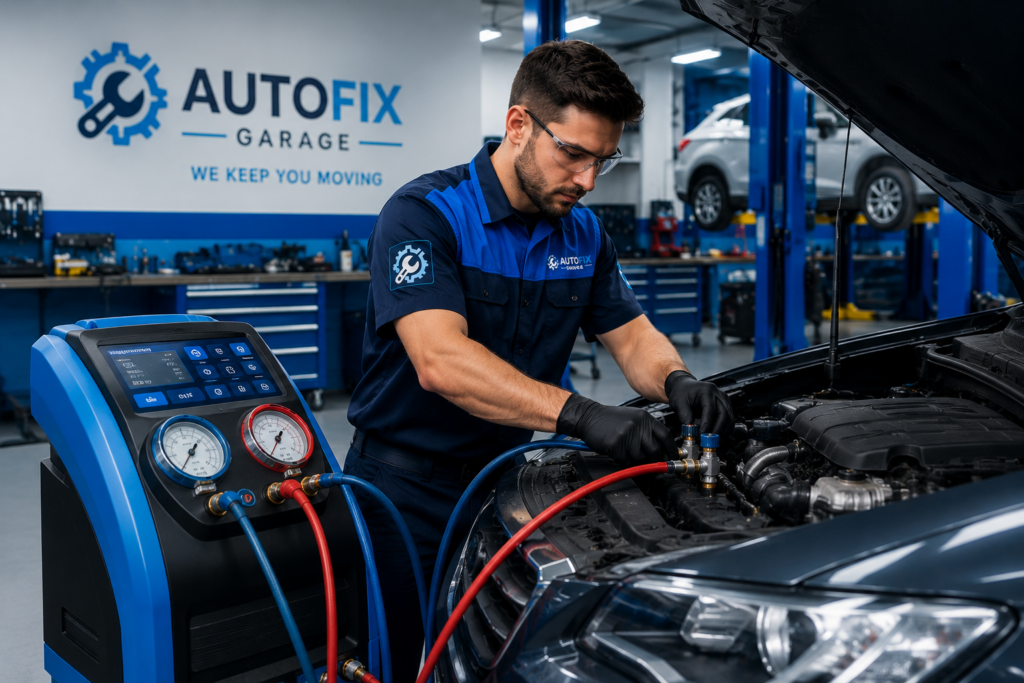
At AutoFix Garage, we provide comprehensive air conditioning diagnostics and repair services designed to keep your vehicle comfortable in every season. Our experienced technicians use advanced equipment to identify cooling system problems quickly and accurately. Whether your AC needs a simple recharge or a complete repair, we’re committed to delivering reliable and professional service.
Our AC services include:
- AC system inspections
- Refrigerant leak detection
- AC recharge services
- Compressor diagnostics
- Cooling fan repairs
- Cabin air filter replacement
- Complete AC system repairs
Our experienced technicians use professional diagnostic equipment to identify problems accurately and recommend effective solutions. Our professional air conditioning repair services help restore cooling performance and prevent costly AC system failures.
Whether your vehicle requires a simple recharge or a major repair, AutoFix Garage is committed to restoring your AC system’s performance quickly and efficiently.
The Benefits of Maintaining Your Vehicle’s AC System
Keeping your AC system in good condition offers numerous advantages.
Benefits include:
- Improved comfort
- Better air quality
- Enhanced visibility
- Reduced driver fatigue
- Longer component lifespan
- Improved vehicle value
- More enjoyable driving experience
Routine maintenance can help ensure consistent cooling performance throughout the year.
Conclusion
Understanding why is my car AC not blowing cold air can help you identify problems early and avoid costly repairs. Common causes include low refrigerant levels, refrigerant leaks, compressor failure, dirty condensers, faulty cooling fans, clogged cabin air filters, and electrical issues.
Regular maintenance and prompt repairs are essential for keeping your air conditioning system operating efficiently. By paying attention to warning signs and scheduling professional inspections when needed, drivers can enjoy reliable cooling performance and a more comfortable driving experience.
If your vehicle’s AC is no longer blowing cold air, trust the experienced team at AutoFix Garage to diagnose the issue and provide professional repair solutions that keep you comfortable on every journey.