
Following an Essential car maintenance checklist for every driver is one of the best ways to keep your vehicle running safely, efficiently, and reliably while reducing the risk of unexpected breakdowns and costly repairs.
Owning a vehicle comes with responsibilities beyond simply filling the fuel tank and driving from one destination to another. Regular vehicle maintenance plays a critical role in ensuring your car performs at its best, remains safe on the road, and retains its value over time. Unfortunately, many drivers overlook routine maintenance until a warning light appears or a mechanical problem develops.
A well-maintained vehicle not only improves reliability but can also help prevent expensive repairs that often result from neglected maintenance. Simple tasks such as checking fluid levels, inspecting tires, and replacing worn components can significantly extend the life of your vehicle and improve overall driving performance.
At AutoFix Garage, we encourage every vehicle owner to follow a proactive maintenance schedule. Whether you drive daily, take long road trips, or use your vehicle occasionally, having a maintenance checklist helps ensure nothing important is overlooked.
This comprehensive guide outlines the essential car maintenance checklist every driver should follow to keep their vehicle in excellent condition throughout the year.
Why Regular Car Maintenance Is Important
Routine maintenance is the foundation of vehicle reliability. Every component in your car works together to ensure safe and efficient operation. When one system is neglected, it can affect other parts and lead to more serious issues.
Benefits of regular maintenance include:
- Improved vehicle safety
- Better fuel efficiency
- Reduced repair costs
- Longer vehicle lifespan
- Enhanced driving performance
- Increased resale value
- Fewer unexpected breakdowns
Preventive maintenance is almost always less expensive than major repairs caused by neglect.
1. Check Engine Oil Regularly
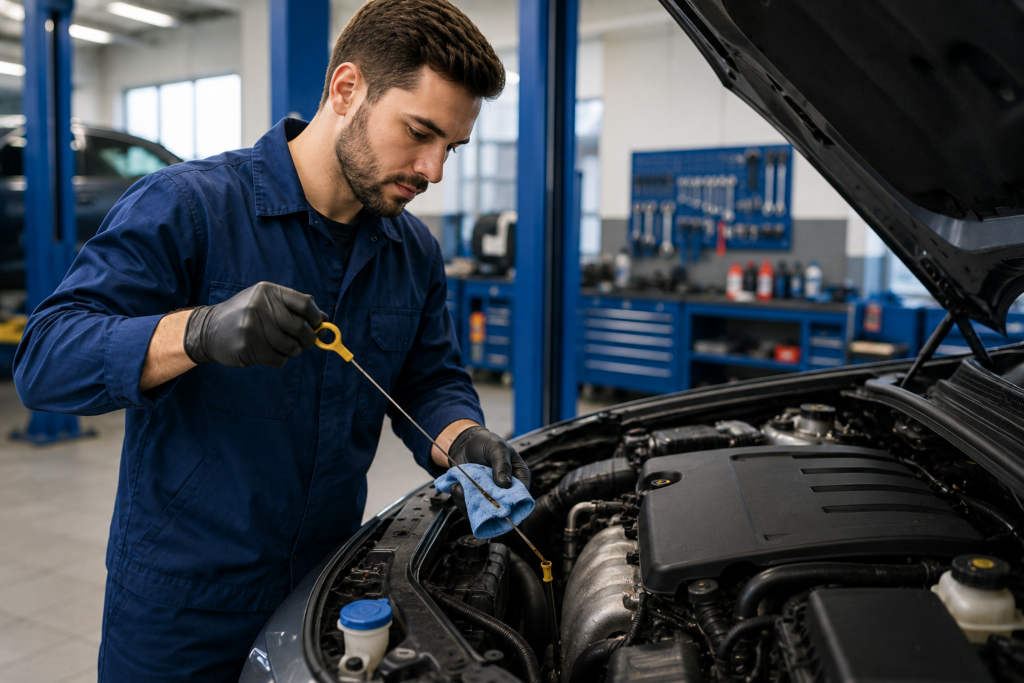
Engine oil is one of the most important fluids in your vehicle. It lubricates internal engine components, reduces friction, and helps regulate temperature. Engine oil is often referred to as the lifeblood of your vehicle because it keeps critical engine components properly lubricated. Regular oil checks help ensure smooth engine performance, reduce friction, and prevent premature wear. Monitoring oil condition and levels can help avoid costly engine repairs and extend the lifespan of your vehicle.
Drivers should:
- Check oil levels monthly
- Monitor oil color and condition
- Follow manufacturer oil change intervals
- Replace oil filters during oil changes
Signs your oil may need attention include:
- Dark or dirty oil
- Engine noise
- Dashboard oil warning light
- Reduced fuel economy
Keeping engine oil fresh helps protect the engine and maintain optimal performance. Learn more about recommended oil change intervals in our guide, How Often Should You Change Your Engine Oil?
2. Inspect Tire Pressure and Condition
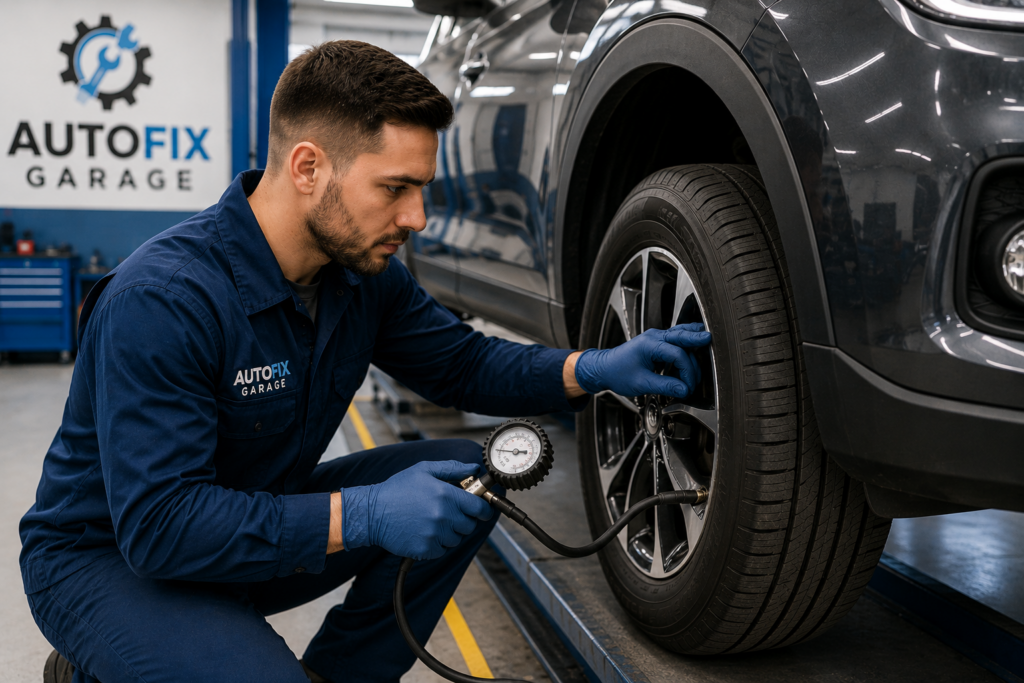
Tires directly affect safety, handling, and fuel efficiency. Proper tire maintenance is essential for safety, fuel efficiency, and overall driving performance. Underinflated or worn tires can affect vehicle handling and increase the risk of accidents. Regular tire inspections help identify issues early and ensure your vehicle remains safe on the road.
Low tire pressure can result in:
- Poor fuel economy
- Uneven tire wear
- Reduced traction
- Increased risk of blowouts
Drivers should:
- Check tire pressure monthly
- Inspect tread depth regularly
- Look for cracks or damage
- Rotate tires according to manufacturer recommendations
Properly maintained tires contribute to a safer and more comfortable driving experience.
3. Monitor Brake System Performance
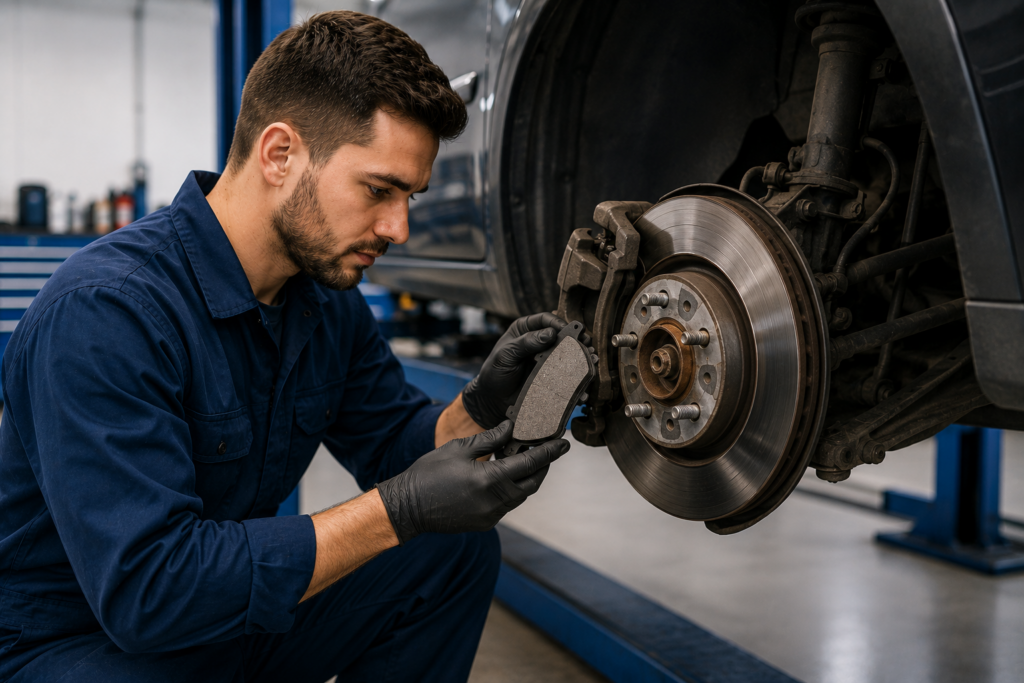
Your braking system plays a vital role in keeping you and your passengers safe. Regular brake inspections can help detect worn components before they compromise stopping power. Addressing brake issues early can improve safety and prevent more expensive repairs in the future.
Regular brake inspections help identify:
- Worn brake pads
- Damaged rotors
- Brake fluid issues
- Caliper problems
Warning signs include:
- Squealing noises
- Grinding sounds
- Vibrations while braking
- Increased stopping distance
If you notice unusual brake symptoms, read our article on 5 Signs You Need Brake Repair Immediately. Prompt brake service can prevent more expensive repairs and improve safety.
4. Check All Vehicle Fluids
Vehicle fluids are essential for the proper operation of many systems, including the engine, transmission, brakes, and cooling system. Low or contaminated fluids can reduce performance and lead to mechanical failures. Routine fluid checks help maintain reliability and prevent unnecessary wear on important components.
Important fluids include:
- Engine oil
- Brake fluid
- Transmission fluid
- Coolant
- Power steering fluid
- Windshield washer fluid
Low or contaminated fluids can cause system damage and reduce performance.
Checking fluid levels regularly helps prevent mechanical failures and costly repairs.
5. Replace Air Filters When Needed
Air filters help protect your engine and improve the quality of air inside your vehicle. Over time, filters can become clogged with dirt, dust, and debris, reducing efficiency and airflow. Replacing them at the recommended intervals helps maintain performance and supports a healthier driving environment.
Your vehicle contains both an engine air filter and a cabin air filter.
Engine air filters help:
- Improve fuel efficiency
- Maintain engine performance
- Protect engine components
Cabin air filters help:
- Improve air quality
- Reduce dust and allergens
- Enhance HVAC performance
Dirty filters can restrict airflow and reduce overall vehicle efficiency.
6. Inspect Battery Condition
A healthy battery is essential for starting your vehicle and powering electrical systems. Batteries naturally lose efficiency as they age, making regular inspections important. Identifying signs of corrosion, weak voltage, or connection issues early can help prevent unexpected breakdowns. A weak battery can leave you stranded without warning.
Routine battery maintenance includes:
- Inspecting terminals
- Checking for corrosion
- Testing battery voltage
- Securing battery connections
Common signs of battery issues include:
- Slow engine cranking
- Dim headlights
- Electrical problems
- Battery warning lights
Regular inspections can help avoid unexpected starting problems.
7. Maintain Proper Coolant Levels
The cooling system helps regulate engine temperature and prevents overheating during operation. Maintaining proper coolant levels is crucial for protecting engine components and ensuring reliable performance. Regular inspections can help detect leaks, worn hoses, and other cooling system issues before they become serious. The cooling system helps prevent engine overheating.
Drivers should:
- Check coolant levels regularly
- Inspect hoses for leaks
- Monitor engine temperature
- Follow coolant replacement schedules
Ignoring cooling system maintenance can lead to:
- Engine overheating
- Head gasket damage
- Expensive engine repairs
A healthy cooling system is essential for long-term engine protection.
8. Test Lights and Electrical Components
Properly functioning lights and electrical systems are important for both safety and visibility. Regular checks ensure that headlights, brake lights, turn signals, and other electrical components are working correctly. Addressing electrical issues promptly can help prevent safety hazards and costly repairs. Vehicle lights are essential for visibility and safety.
Inspect regularly:
- Headlights
- Brake lights
- Turn signals
- Fog lights
- Interior lights
Electrical systems should also be checked for:
- Faulty wiring
- Blown fuses
- Battery issues
Dashboard alerts should never be ignored. Learn more in our guide, Why Is My Check Engine Light On? Properly functioning lights help keep you visible and compliant with traffic laws.
9. Replace Windshield Wipers
Clear visibility is essential for safe driving, especially during rain, fog, or adverse weather conditions. Windshield wipers gradually wear out over time and become less effective at clearing water and debris. Replacing worn wiper blades helps maintain visibility and improves driving safety. Windshield wipers play an important role in maintaining visibility during rain and adverse weather conditions.
Replace wipers if you notice:
- Streaking
- Skipping
- Cracking rubber
- Poor visibility
Most drivers benefit from replacing wiper blades every 6 to 12 months.
10. Inspect Belts and Hoses
Belts and hoses are responsible for supporting several important vehicle systems, including the engine cooling system and charging system. Over time, these components can crack, wear, or become damaged due to heat and age. Regular inspections help identify potential problems before they lead to unexpected breakdowns. Belts and hoses support many critical vehicle systems.
Over time, they can become:
- Cracked
- Worn
- Brittle
- Loose
A failed belt or hose can lead to:
- Engine overheating
- Loss of power steering
- Charging system failure
Routine inspections help identify wear before failure occurs.
11. Check Suspension and Steering Components
Suspension and steering systems affect ride quality and vehicle control.
Signs of suspension issues include:
- Uneven tire wear
- Excessive bouncing
- Pulling to one side
- Poor handling
Regular inspections help maintain comfort and driving stability.
12. Keep Your Vehicle Clean
Vehicle cleanliness is often overlooked as part of maintenance.
Regular cleaning helps:
- Protect paint
- Prevent rust
- Improve visibility
- Preserve resale value
Maintenance should include:
- Washing exterior surfaces
- Cleaning wheels
- Vacuuming interiors
- Removing debris from vents and drains
A clean vehicle often lasts longer and looks better.
Seasonal Maintenance Tips
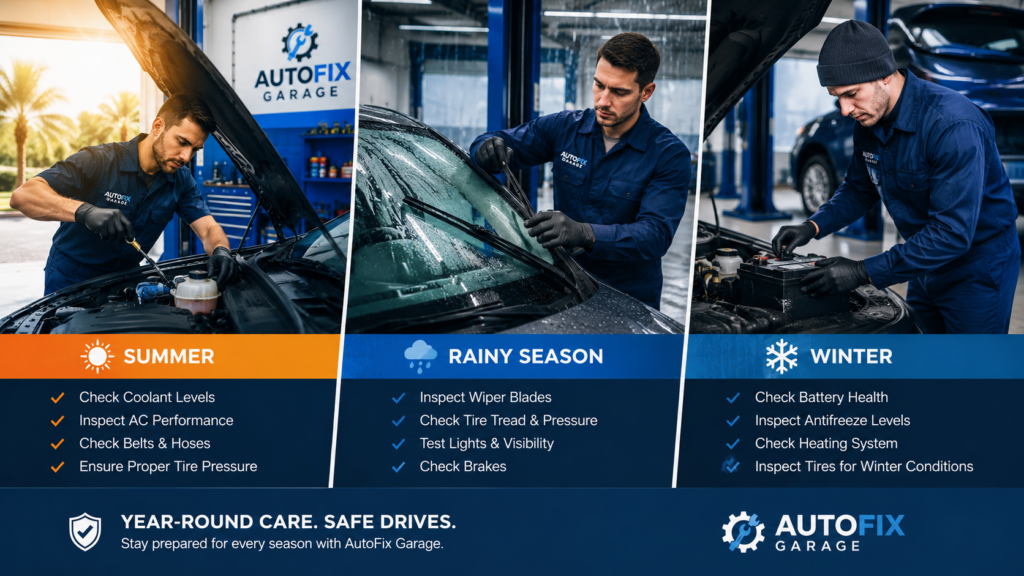
Every season brings different driving conditions that can affect your vehicle’s performance and reliability. From extreme summer heat to cold winter temperatures and rainy weather, changing conditions place additional stress on various vehicle systems. Following seasonal maintenance recommendations can help prevent unexpected issues, improve safety, and keep your car running efficiently throughout the year.
Summer Maintenance
- Check AC performance
- Monitor coolant levels
- Inspect tires
- Test battery condition
If your air conditioning system is not cooling properly, read Why Is My Car AC Not Blowing Cold Air? for common causes and solutions.
Winter Maintenance
- Check antifreeze levels
- Inspect heater operation
- Test battery performance
- Replace worn wiper blades
Rainy Season Maintenance
- Inspect tires
- Check wipers
- Test lights
- Verify brake performance
Seasonal maintenance helps prepare your vehicle for changing conditions.
Warning Signs You Should Never Ignore
Even with regular maintenance, drivers should remain alert for warning signs.
Examples include:
- Dashboard warning lights
- Unusual noises
- Fluid leaks
- Burning smells
- Reduced fuel economy
- Vibrations
- Difficulty starting
Addressing these issues early often prevents larger problems from developing.
How Often Should Vehicle Maintenance Be Performed?
Maintenance schedules vary by vehicle, driving habits, and manufacturer recommendations.
General guidelines include:
Monthly
- Check tire pressure
- Inspect fluid levels
- Test lights
Every 3,000–7,500 Miles
- Change engine oil
- Replace oil filter
Every 6 Months
- Rotate tires
- Inspect brakes
- Check battery condition
Annually
- Full vehicle inspection
- Cooling system check
- AC system inspection
- Suspension evaluation
Following a consistent schedule helps ensure nothing important is missed.
How AutoFix Garage Helps Drivers Stay Safe
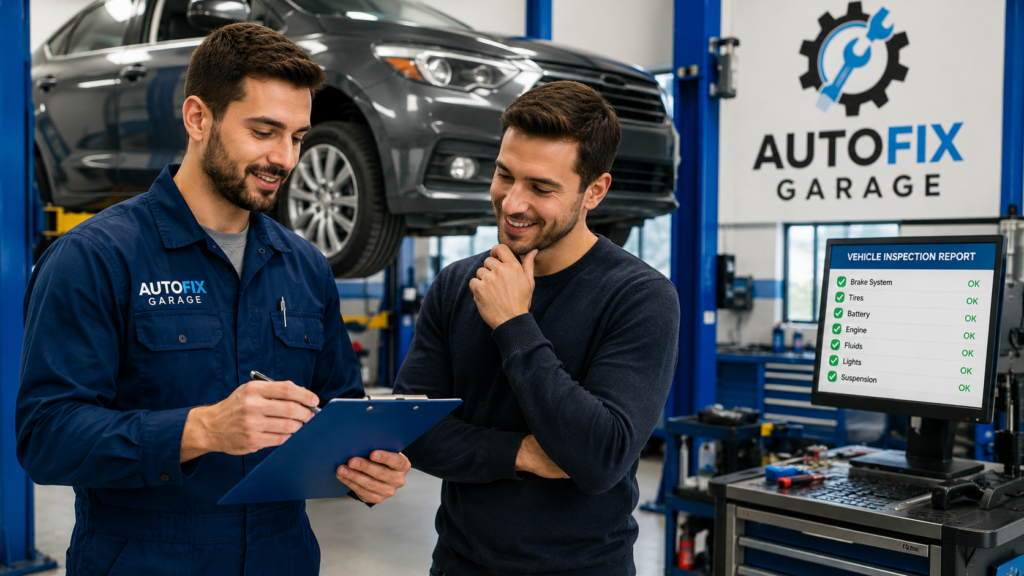
At AutoFix Garage, we are committed to helping drivers maintain safe, reliable, and high-performing vehicles through professional maintenance and repair services. Our experienced technicians perform thorough inspections, identify potential issues early, and provide customized maintenance solutions based on your vehicle’s needs. By focusing on preventive care and quality workmanship, we help reduce the risk of breakdowns, improve vehicle safety, and keep you confident on the road.
Our maintenance services include:
- Oil changes
- Brake inspections
- Tire services
- Battery testing
- Cooling system inspections
- Air conditioning maintenance
- Comprehensive vehicle inspections
Our experienced technicians use advanced diagnostic equipment to identify potential issues before they become serious problems. Our professional vehicle maintenance services help identify potential issues before they become costly repairs.
Whether you need routine maintenance or a complete vehicle inspection, AutoFix Garage is committed to helping drivers keep their vehicles operating safely and efficiently.
The Long-Term Benefits of Following a Maintenance Checklist
Consistently following a vehicle maintenance checklist can provide significant long-term benefits for both your car and your wallet. Routine maintenance helps prevent major mechanical failures, improves fuel efficiency, extends the lifespan of critical components, and enhances overall vehicle reliability. By staying proactive with inspections and scheduled services, drivers can enjoy safer journeys, lower repair costs, and greater peace of mind for years to come. Drivers who consistently follow an essential car maintenance checklist for every driver often experience:
- Lower repair costs
- Improved fuel economy
- Better safety
- Increased reliability
- Longer vehicle lifespan
- Higher resale value
- Greater peace of mind
Regular maintenance is an investment that pays for itself over time by preventing costly mechanical failures.
Conclusion
According to the National Highway Traffic Safety Administration (NHTSA), routine maintenance plays an important role in vehicle safety and reliability. Following an essential car maintenance checklist for every driver is one of the most effective ways to protect your vehicle, improve safety, and reduce long-term ownership costs. Simple maintenance tasks such as checking fluids, inspecting tires, monitoring brakes, and replacing worn components can make a significant difference in vehicle performance and reliability.
By staying proactive and scheduling routine inspections, drivers can avoid many common automotive problems before they become major repairs. If you need professional maintenance services or a complete vehicle inspection, trust the experts at AutoFix Garage to keep your vehicle running smoothly and safely for years to come.